Heliophysics

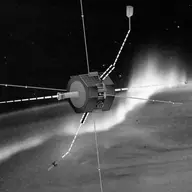
Fast Auroral Snapshot Explorer

In-Situ Probe · Competed · Agency-led · Launched on August 21, 1996 · Completed · LCC: $50M/$117M (2025 $)Life-cycle cost: NASA’s reported cost to build, launch, and operate a mission through its prime mission, plus documented partner contributions, in 2025 dollars. Extended missions are not included. Methods · Wikipedia

Scope Active Mission WindowActivePapers published from the first full month after science operations begin through two years after the mission ends. Citations are counted through the third calendar year after each paper appears. For FAST, papers published September 1, 1996 to June 1, 2011. Methods LifetimeLifetimeEvery tracked publication to date, with every citation to date. For FAST, papers published from 1997 to November 3, 2026. Methods
Tracked publicationsTracked publications: peer-reviewed papers we found that name the mission or its instruments in their titles, abstracts, or keywords. Papers that used the data without naming it are missed. Methods283
CitationsCitations: every citation these publications have drawn to date. Older missions have had longer to collect them. Methods9,696
Citation indices
h-indexh-index: the largest h such that h papers have at least h citations each. It only grows with time, so older missions score higher. Methods53
g-indexg-index: the largest g for which the g most-cited papers together hold at least g² citations. Like the h-index, but it lets the most-cited papers count for more. Methods86
m-indexm-index: a mission’s h-index divided by the years since its first peer-reviewed paper. It falls every 1 January even when nothing else changes; the figure shown is as of November 3, 2026. It also discounts the long operating life that larger missions paid for. Methods1.8
toritori (total research impact, from SciX): for every paper citing one of the mission’s papers, 1 divided by the citing paper’s reference count times the cited paper’s author count, summed, with self-citations removed. It favors citations from papers with short reference lists and from outside the mission’s own authors. Computed over the tracked citation graph, which can be slightly incomplete. Always over every tracked publication to date, whichever scope is chosen. Methods55
riqriq (research impact quotient): 1,000 times the square root of tori, divided by the years since the mission’s first paper. A rate, not a total, so it does not keep growing with age the way the h-index and tori do. Like tori, always over every tracked publication to date. Methods247

Publications and citations by year (lifetime)

Publications per yearCumulative citations

Institutional contributions (lifetime)The institutions SciX lists for each paper’s authors, as printed on the paper, located through the Research Organization Registry. A square counts a paper once, however many of its authors worked there. Methods

Loading the map…

Tracked publications over the lifetime (283)

All publications CSV · JSON

  1. FAST satellite observations of large-amplitude solitary structures

    Ergun, R. E., 1998, GeoRL

    517 lifetime citations

  2. FAST observations in the downward auroral current region: Energetic upgoing electron beams, parallel potential drops, and ion heating

    Carlson, C. W., 1998, GeoRL

    278 lifetime citations

  3. FAST satellite observations of electric field structures in the auroral zone

    Ergun, R. E., 1998, GeoRL

    267 lifetime citations

  4. Modulated electron-acoustic waves in auroral density cavities: FAST observations

    Pottelette, R., 1999, GeoRL

    264 lifetime citations

  5. Factors controlling ionospheric outflows as observed at intermediate altitudes

    Strangeway, R. J., 2005, JGRA

    249 lifetime citations

  6. The Fast Auroral SnapshoT (FAST) Mission

    Carlson, C. W., 1998, GeoRL

    235 lifetime citations

  7. Electron-Cyclotron Maser Driven by Charged-Particle Acceleration from Magnetic Field-aligned Electric Fields

    Ergun, R. E., 2000, ApJ

    190 lifetime citations

  8. FAST satellite wave observations in the AKR source region

    Ergun, R. E., 1998, GeoRL

    182 lifetime citations

  9. Variations in the polar cap area during two substorm cycles

    Milan, S. E., 2003, AnGeo

    172 lifetime citations

  10. Observation of two distinct, rapid loss mechanisms during the 20 November 2003 radiation belt dropout event

    Bortnik, J., 2006, JGRA

    170 lifetime citations

  11. Properties of small-scale Alfvén waves and accelerated electrons from FAST

    Chaston, C. C., 2003, JGRA

    158 lifetime citations

  12. Nonlinear two-stream instabilities as an explanation for auroral bipolar wave structures

    Goldman, M. V., 1999, GeoRL

    151 lifetime citations

  13. Auroral ion acceleration in dispersive Alfvén waves

    Chaston, C. C., 2004, JGRA

    136 lifetime citations

  14. Microstructure of the auroral acceleration region as observed by FAST

    McFadden, J. P., 1999, JGR

    126 lifetime citations

  15. Parallel electric fields in the upward current region of the aurora: Indirect and direct observations

    Ergun, R. E., 2002, PhPl

    126 lifetime citations

  16. Driven Alfven waves and electron acceleration: A FAST case study

    Chaston, C. C., 2002, GeoRL

    119 lifetime citations

  17. Energy deposition by Alfvén waves into the dayside auroral oval: Cluster and FAST observations

    Chaston, C. C., 2005, JGRA

    117 lifetime citations

  18. parallel electric fields in discrete arcs

    Ergun, R. E., 2000, GeoRL

    115 lifetime citations

  19. HEUVAC: A new high resolution solar EUV proxy model

    Richards, Philip G., 2006, AdSpR

    115 lifetime citations

  20. FAST observations of VLF waves in the auroral zone: Evidence of very low plasma densities

    Strangeway, R. J., 1998, GeoRL

    105 lifetime citations

How we found these papers

We searched NASA’s Science Explorer (SciX) for peer-reviewed articles naming FAST in the title, abstract or keywords; standard filters drop articles that are not peer-reviewed and magazine pieces.

((=abs:"Fast Auroral Snapshot" OR =abs:"Fast Auroral Snapshots" OR (abs:FAST AND (abs:satellite OR abs:spacecraft OR abs:mission OR abs:probe) AND (abs:aurora OR abs:auroral)) OR (abs:FAST AND (abs:satellite OR abs:spacecraft) AND (abs:ionospher* OR abs:magnetospher* OR abs:photoelectron*))) AND NOT =abs:"Aperture Spherical" AND NOT =abs:"FAST events" AND NOT =abs:"FAST perturbations" AND NOT =abs:"Swarm FAST") AND property:refereed AND doctype:article AND pubdate:[1996-09 TO 2040-01] AND NOT bibstem:("A&R" OR "ACPD" OR "AIASJ" OR "AMTD" OR "AeAm" OR "AirSp" OR "AsNow" OR "AsUAI" OR "AvWST" OR "BGD" OR "C&E" OR "C&T" OR "CAPJ" OR "CliPD" OR "E&S" OR "ENews" OR "ESDD" OR "ESSDD" OR "ESuDD" OR "GID" OR "GMDD" OR "GeCAS" OR "HESSD" OR "IrAJ" OR "JCos" OR "JRASC" OR "LAstr" OR "MNSSA" OR "Met" OR "NHESD" OR "NPGD" OR "NewSc" OR "OcScD" OR "Orion" OR "PhT" OR "PhTea" OR "PhuZ" OR "PhyOJ" OR "PhyW" OR "PlR" OR "SOILD" OR "SciAm" OR "SpFl" OR "TCD" OR "ZemVs")

Open in SciX

Removed after review (4)

  1. The EISCAT Svalbard radar: A case study in modern incoherent scatter radar system design Design of the EISCAT Svalbard radar; mentions FAST only as a supported satellite. Decision 🤖
  2. Wave-Particle Correlator Instrument Design Design of wave-particle correlator instruments; reports no results. Decision 🤖
  3. Geomagnetic Field Investigation on the POLAR Microsatellite SACI-I Plans for the Brazilian SACI-1 satellite; mentions FAST only as a future partner. Decision 🤖
  4. Detecting exoplanets with FAST? FAST here is the Chinese radio telescope, not the NASA spacecraft. Decision 🤖