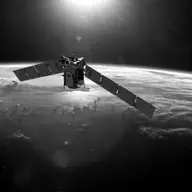
Thermosphere Ionosphere Mesosphere Energetics and Dynamics (TIMED)
Remote Sensing Observatory · Directed · Agency-led · Launched on December 7, 2001 · Extended Mission · LCC: $237M/$491M (2025 $)Life-cycle cost: NASA’s reported cost to build, launch, and operate a mission through its prime mission, plus documented partner contributions, in 2025 dollars. Extended missions are not included. Methods · Wikipedia
ScopeActive Mission WindowActivePapers published from the first full month after science operations begin through two years after the mission ends. Citations are counted through the third calendar year after each paper appears. For TIMED, papers published February 1, 2002 to January 1, 2024. Methods/LifetimeLifetimeEvery tracked publication to date, with every citation to date. For TIMED, papers published from 2003 to November 3, 2026. Methods
Tracked publicationsTracked publications: peer-reviewed papers we found that name the mission or its instruments in their titles, abstracts, or keywords. Papers that used the data without naming it are missed. Methods
1,262
CitationsCitations: every citation these publications have drawn to date. Older missions have had longer to collect them. Methods
32,401
Citation indices
h-indexh-index: the largest h such that h papers have at least h citations each. It only grows with time, so older missions score higher. Methods
80
g-indexg-index: the largest g for which the g most-cited papers together hold at least g² citations. Like the h-index, but it lets the most-cited papers count for more. Methods
120
m-indexm-index: a mission’s h-index divided by the years since its first peer-reviewed paper. It falls every 1 January even when nothing else changes; the figure shown is as of November 3, 2026. It also discounts the long operating life that larger missions paid for. Methods
3.3
toritori (total research impact, from SciX): for every paper citing one of the mission’s papers, 1 divided by the citing paper’s reference count times the cited paper’s author count, summed, with self-citations removed. It favors citations from papers with short reference lists and from outside the mission’s own authors. Computed over the tracked citation graph, which can be slightly incomplete. Always over every tracked publication to date, whichever scope is chosen. Methods
153
riqriq (research impact quotient): 1,000 times the square root of tori, divided by the years since the mission’s first paper. A rate, not a total, so it does not keep growing with age the way the h-index and tori do. Like tori, always over every tracked publication to date. Methods
515
Publications and citations by year (lifetime)
Publications per yearCumulative citations
Institutional contributions (lifetime)The institutions SciX lists for each paper’s authors, as printed on the paper, located through the Research Organization Registry. A square counts a paper once, however many of its authors worked there. Methods
We searched NASA’s Science Explorer (SciX) for peer-reviewed articles naming TIMED in the title, abstract or keywords; standard filters drop articles that are not peer-reviewed and magazine pieces.
((=abs:"Thermosphere Ionosphere Mesosphere Energetics and Dynamics" OR (abs:TIMED AND (abs:SABER OR abs:GUVI OR abs:TIDI OR =abs:"Solar EUV Experiment" OR =abs:"TIMED satellite" OR =abs:"TIMED spacecraft" OR =abs:"TIMED mission" OR abs:"TIMED SEE" OR abs:irradiance OR abs:thermosphere OR abs:ionosphere OR abs:mesosphere)) OR (abs:SABER AND (abs:mesosphere OR abs:thermosphere OR abs:ionosphere OR abs:stratosphere OR abs:stratopause OR abs:mesopause OR abs:airglow OR abs:nightglow OR abs:ozone OR abs:hydroxyl OR abs:tides OR abs:tide OR =abs:"middle atmosphere" OR =abs:"gravity wave" OR =abs:"gravity waves" OR =abs:"nitric oxide")) OR (abs:GUVI AND (abs:thermosphere OR abs:ionosphere OR abs:aurora OR abs:auroral OR abs:airglow OR abs:dayglow)) OR (abs:TIDI AND (abs:mesosphere OR abs:thermosphere OR abs:winds OR abs:wind OR abs:tides OR abs:tide)) )) AND property:refereed AND doctype:article AND pubdate:[2002-02 TO 2040-01] AND NOT bibstem:("A&R" OR "ACPD" OR "AIASJ" OR "AMTD" OR "AeAm" OR "AirSp" OR "AsNow" OR "AsUAI" OR "AvWST" OR "BGD" OR "C&E" OR "C&T" OR "CAPJ" OR "CliPD" OR "E&S" OR "ENews" OR "ESDD" OR "ESSDD" OR "ESuDD" OR "GID" OR "GMDD" OR "GeCAS" OR "HESSD" OR "IrAJ" OR "JCos" OR "JRASC" OR "LAstr" OR "MNSSA" OR "Met" OR "NHESD" OR "NPGD" OR "NewSc" OR "OcScD" OR "Orion" OR "PhT" OR "PhTea" OR "PhuZ" OR "PhyOJ" OR "PhyW" OR "PlR" OR "SOILD" OR "SciAm" OR "SpFl" OR "TCD" OR "ZemVs")