Heliophysics

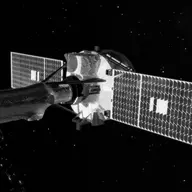
IRIS

674 tracked publications and 18,613 citations from 2013–2026. Interface Region Imaging Spectrograph. Launched 2013. Life-cycle cost: $172M in 2025 dollars. Active Mission Window August 1, 2013 to January 1, 2024: 541 publications, 63 top-10% credit.

Remote Sensing Observatory · h-index 65 · 27 papers with 100+ citations · prime mission ended 2016


Lifetime

Scope Papers published from the first full month after science operations begin through 2 years after the mission ends. Citations are counted through the third calendar year after each paper appears. Methods Papers published from the first full month after science operations begin through 2 years after the prime mission ends. Citations are counted through the third calendar year after each paper appears. Methods Every tracked publication to date, with every citation to date. Methods

Key measures

Active Mission Window · papers August 1, 2013 to January 1, 2024
Tracked publicationsTracked publications: peer-reviewed research papers we found for the mission. The list may not be complete. Methods541
CitationsCitations received by the tracked publications in the selected scope. The two windowed scopes count each paper’s citations only within its citation window. Methods8,399
Mean citations per publicationMean citations: total citations divided by tracked publications in the selected scope. One blockbuster paper can lift it. Methods16
Median citations per publicationMedian citations: the middle paper’s citation count in the selected scope; half the papers have more, half fewer. A single blockbuster sways it less than the mean. Methods12
Uncited publicationsUncited publications: papers with no citations in the selected scope. Methods14 (2.6%)
Top-10% creditTop 10%: among the 10% most-cited papers from this division’s missions, ranked against papers published around the same time. A paper naming several missions is split evenly among the missions in this division that claim it, so counts can be fractional. Methods63 · 4.4% of division
Top-1% creditTop 1%: among the 1% most-cited papers from this division’s missions within the selected window. Not adjusted for publication year. A paper naming several missions is split evenly among the missions in this division that claim it, so counts can be fractional. Methods3 · 2.1% of division
Lifetime indices · every tracked publication to date, in any scope
h-indexh-index: the largest h such that h papers have at least h citations each. It only grows with time, so older missions score higher. Methods65
g-indexg-index: the largest g for which the g most-cited papers together hold at least g² citations. Like the h-index, but it lets the most-cited papers count for more. Methods98
m-index, as of October 4, 2026m-index: a mission’s h-index divided by the years since its first peer-reviewed paper. It falls every 1 January even when nothing else changes, so it belongs to the date shown; it also discounts the long operating life that larger missions paid for. Methods4.6
toritori (total research impact, from ADS): for every paper citing one of the mission’s papers, 1 divided by the citing paper’s reference count times the cited paper’s author count, summed, with self-citations removed. It favors citations from papers with short reference lists and from outside the mission’s own authors. Computed over the tracked citation graph, which can be slightly incomplete. Methods48
riqriq (research impact quotient): 1,000 times the square root of tori, divided by the years since the mission’s first paper. A rate, not a total, so it does not keep growing with age the way the h-index and tori do. Methods494

Tracked publications

  1. The Interface Region Imaging Spectrograph (IRIS)

    De Pontieu, B., 2014, SoPh

    1,275 citations

  2. Prevalence of small-scale jets from the networks of the solar transition region and chromosphere

    Tian, H., 2014, Sci

    264 citations

  3. The Formation of IRIS Diagnostics. II. The Formation of the Mg II h&k Lines in the Solar Atmosphere

    Leenaarts, J., 2013, ApJ

    236 citations

  4. On the generation of solar spicules and Alfvénic waves

    Martínez-Sykora, J., 2017, Sci

    197 citations

  5. Hot explosions in the cool atmosphere of the Sun

    Peter, H., 2014, Sci

    194 citations

  6. The Formation of IRIS Diagnostics. I. A Quintessential Model Atom of Mg II and General Formation Properties of the Mg II h&k Lines

    Leenaarts, J., 2013, ApJ

    176 citations

  7. An Interface Region Imaging Spectrograph First View on Solar Spicules

    Pereira, T. M. D., 2014, ApJ

    161 citations

  8. Evidence of nonthermal particles in coronal loops heated impulsively by nanoflares

    Testa, P., 2014, Sci

    147 citations

  9. Temporal Evolution of Multiple Evaporating Ribbon Sources in a Solar Flare

    Graham, D. R., 2015, ApJ

    146 citations

  10. Imaging and Spectroscopic Observations of Magnetic Reconnection and Chromospheric Evaporation in a Solar Flare

    Tian, Hui, 2014, ApJ

    139 citations

  11. Ellerman Bombs at High Resolution. III. Simultaneous Observations with IRIS and SST

    Vissers, G. J. M., 2015, ApJ

    137 citations

  12. Temporal Evolution of Chromospheric Evaporation: Case Studies of the M1.1 Flare on 2014 September 6 and X1.6 Flare on 2014 September 10

    Tian, Hui, 2015, ApJ

    135 citations

  13. Slipping Magnetic Reconnection, Chromospheric Evaporation, Implosion, and Precursors in the 2014 September 10 X1.6-Class Solar Flare

    Dudík, Jaroslav, 2016, ApJ

    131 citations

  14. Resonant Absorption of Transverse Oscillations and Associated Heating in a Solar Prominence. II. Numerical Aspects

    Antolin, P., 2015, ApJ

    129 citations

  15. The Formation of IRIS Diagnostics. III. Near-ultraviolet Spectra and Images

    Pereira, T. M. D., 2013, ApJ

    123 citations

  16. Are IRIS Bombs Connected to Ellerman Bombs?

    Tian, Hui, 2016, ApJ

    122 citations

  17. High-resolution Observations of the Shock Wave Behavior for Sunspot Oscillations with the Interface Region Imaging Spectrograph

    Tian, H., 2014, ApJ

    119 citations

  18. Homologous Helical Jets: Observations By IRIS, SDO, and Hinode and Magnetic Modeling With Data-Driven Simulations

    Cheung, Mark C. M., 2015, ApJ

    118 citations

  19. The Atmospheric Response to High Nonthermal Electron Beam Fluxes in Solar Flares. I. Modeling the Brightest NUV Footpoints in the X1 Solar Flare of 2014 March 29

    Kowalski, Adam F., 2017, ApJ

    118 citations

  20. Bombs and Flares at the Surface and Lower Atmosphere of the Sun

    Hansteen, V. H., 2017, ApJ

    114 citations

How we found these papers

We searched NASA’s Astrophysics Data System (ADS) for peer-reviewed articles naming IRIS in the title, abstract or keywords; standard filters drop articles that are not peer-reviewed and magazine pieces. SciX is ADS’s current interface.

((=abs:"Interface Region Imaging Spectrograph" OR (abs:"IRIS" AND NOT =abs:Voyager AND NOT =abs:"IRIS rocket" AND NOT =abs:"coronas-f" AND NOT =abs:"koronas-f" AND (=abs:sun OR abs:chromosphere OR abs:corona OR abs:flare)))) AND property:refereed AND doctype:article AND pubdate:[2013-08 TO 2040-01] AND NOT bibstem:("A&R" OR "AIASJ" OR "AeAm" OR "AirSp" OR "AsNow" OR "AsUAI" OR "AvWST" OR "C&E" OR "C&T" OR "CAPJ" OR "E&S" OR "ENews" OR "IrAJ" OR "JCos" OR "JRASC" OR "LAstr" OR "MNSSA" OR "Met" OR "NewSc" OR "Orion" OR "PhT" OR "PhTea" OR "PhuZ" OR "PhyOJ" OR "PhyW" OR "PlR" OR "SciAm" OR "SpFl" OR "ZemVs")
Open in SciX

Removed after review (17)

  1. 2013AnGeo..31.1709M IRIS here is a ground-based imaging riometer in Antarctica, not the solar spacecraft. Decision 🤖
  2. 2013JASTP.105..358W IRIS here is a ground-based imaging riometer in Finland, not the solar spacecraft. Decision 🤖
  3. 2014REne...66..478S IRIS here is decision-support software for solar-farm siting, not the spacecraft. Decision 🤖
  4. 2015IzPSE..51...70B IRIS here is a seismology network, not the solar spacecraft. Decision 🤖
  5. 2016AN....337..621C IRIS here is a ground-based infrared telescope in Chile, not the solar spacecraft. Decision 🤖
  6. 2017ApJ...847..131M IRIS here is a ground-based optical telescope, not the solar spacecraft. Decision 🤖
  7. 2017PhDT.......205M IRIS here is an X-ray instrument on the Russian CORONAS-F satellite, not the NASA spacecraft. Decision 🤖
  8. 2018AJ....156..291C IRIS here is a planned Thirty Meter Telescope instrument, not the solar spacecraft. Decision 🤖
  9. Solar flare induced cosmic noise absorption IRIS here is a ground-based imaging riometer in Finland, not the solar spacecraft. Decision 🤖
  10. 2019AJ....158..241H IRIS here is a ground-based infrared telescope, not the solar spacecraft. Decision 🤖
  11. 2021Icar..35714162S IRIS here is a laboratory infrared spectral database, not the solar spacecraft. Decision 🤖
  12. 2021JSWSC..11...16A IRIS here is an ionospheric sensor suite on the CIRCE CubeSats, not the solar spacecraft. Decision 🤖
  13. Probing the Physics of the Solar Atmosphere with the Multi-slit Solar Explorer (MUSE). II. Flares and Eruptions Science case for the proposed MUSE mission; mentions IRIS only as a precedent. Decision 🤖
  14. 2022ApJS..258...39C IRIS here is a Kepler light-curve catalogue, not the solar spacecraft. Decision 🤖
  15. 2023AMT....16..727F IRIS here is a ground-based infrared radiometer, not the solar spacecraft. Decision 🤖
  16. 2023ScTEn.90266072S IRIS here is a laboratory isotope technique, not the solar spacecraft. Decision 🤖
  17. 2026AdSpR..77.3934W IRIS here is a laboratory infrared spectral database, not the solar spacecraft. Decision 🤖