Heliophysics

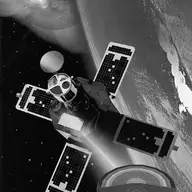
TRACE

714 tracked publications and 39,075 citations from 1998–2025. Transition Region And Coronal Explorer. Launched 1998. Life-cycle cost: $104M in 2025 dollars. Active Mission Window June 1, 1998 to July 1, 2012: 654 publications, 96 top-10% credit.

Remote Sensing Observatory · h-index 103 · 108 papers with 100+ citations · prime mission ended 1999


Lifetime

Scope Papers published from the first full month after science operations begin through 2 years after the mission ends. Citations are counted through the third calendar year after each paper appears. Methods Papers published from the first full month after science operations begin through 2 years after the prime mission ends. Citations are counted through the third calendar year after each paper appears. Methods Every tracked publication to date, with every citation to date. Methods

Key measures

Active Mission Window · papers June 1, 1998 to July 1, 2012
Tracked publicationsTracked publications: peer-reviewed research papers we found for the mission. The list may not be complete. Methods654
CitationsCitations received by the tracked publications in the selected scope. The two windowed scopes count each paper’s citations only within its citation window. Methods8,283
Mean citations per publicationMean citations: total citations divided by tracked publications in the selected scope. One blockbuster paper can lift it. Methods13
Median citations per publicationMedian citations: the middle paper’s citation count in the selected scope; half the papers have more, half fewer. A single blockbuster sways it less than the mean. Methods9
Uncited publicationsUncited publications: papers with no citations in the selected scope. Methods50 (7.6%)
Top-10% creditTop 10%: among the 10% most-cited papers from this division’s missions, ranked against papers published around the same time. A paper naming several missions is split evenly among the missions in this division that claim it, so counts can be fractional. Methods96 · 6.6% of division
Top-1% creditTop 1%: among the 1% most-cited papers from this division’s missions within the selected window. Not adjusted for publication year. A paper naming several missions is split evenly among the missions in this division that claim it, so counts can be fractional. Methods5 · 3.5% of division
Lifetime indices · every tracked publication to date, in any scope
h-indexh-index: the largest h such that h papers have at least h citations each. It only grows with time, so older missions score higher. Methods103
g-indexg-index: the largest g for which the g most-cited papers together hold at least g² citations. Like the h-index, but it lets the most-cited papers count for more. Methods162
m-index, as of October 4, 2026m-index: a mission’s h-index divided by the years since its first peer-reviewed paper. It falls every 1 January even when nothing else changes, so it belongs to the date shown; it also discounts the long operating life that larger missions paid for. Methods3.6
toritori (total research impact, from ADS): for every paper citing one of the mission’s papers, 1 divided by the citing paper’s reference count times the cited paper’s author count, summed, with self-citations removed. It favors citations from papers with short reference lists and from outside the mission’s own authors. Computed over the tracked citation graph, which can be slightly incomplete. Methods347
riqriq (research impact quotient): 1,000 times the square root of tori, divided by the years since the mission’s first paper. A rate, not a total, so it does not keep growing with age the way the h-index and tori do. Methods664

Tracked publications

  1. The transition region and coronal explorer

    Handy, B. N., 1999, SoPh

    1,111 citations

  2. TRACE observation of damped coronal loop oscillations: Implications for coronal heating

    Nakariakov, V. M., 1999, Sci

    848 citations

  3. Coronal Loop Oscillations Observed with the Transition Region and Coronal Explorer

    Aschwanden, Markus J., 1999, ApJ

    832 citations

  4. Coronal Mass Ejections: Observations

    Webb, David F., 2012, LRSP

    706 citations

  5. Photospheric and heliospheric magnetic fields

    Schrijver, Carolus J., 2003, SoPh

    681 citations

  6. Flare Observations

    Benz, Arnold O., 2017, LRSP

    476 citations

  7. Determination of the coronal magnetic field by coronal loop oscillations

    Nakariakov, V. M., 2001, A&A

    454 citations

  8. The Damping of Coronal Loop Oscillations

    Ruderman, M. S., 2002, ApJ

    431 citations

  9. Particle acceleration and kinematics in solar flares - A Synthesis of Recent Observations and Theoretical Concepts (Invited Review)

    Aschwanden, Markus J., 2002, SSRv

    417 citations

  10. A new view of the solar outer atmosphere by the Transition Region and Coronal Explorer

    Schrijver, C. J., 1999, SoPh

    369 citations

  11. The Nature of Flare Ribbons in Coronal Null-Point Topology

    Masson, S., 2009, ApJ

    359 citations

  12. Transverse Oscillations in Coronal Loops Observed with TRACE II. Measurements of Geometric and Physical Parameters

    Aschwanden, Markus J., 2002, SoPh

    338 citations

  13. The Magnetic Topology of Solar Eruptions

    Antiochos, S. K., 1998, ApJ

    336 citations

  14. Time Variability of the ``Quiet'' Sun Observed with TRACE. II. Physical Parameters, Temperature Evolution, and Energetics of Extreme-Ultraviolet Nanoflares

    Aschwanden, Markus J., 2000, ApJ

    323 citations

  15. Flare Observations

    Benz, Arnold O., 2008, LRSP

    281 citations

  16. An Ab Initio Approach to the Solar Coronal Heating Problem

    Gudiksen, Boris Vilhelm, 2005, ApJ

    276 citations

  17. Evidence for Nonuniform Heating of Coronal Loops Inferred from Multithread Modeling of TRACE Data

    Aschwanden, Markus J., 2000, ApJ

    274 citations

  18. Observations of the Failed Eruption of a Filament

    Ji, Haisheng, 2003, ApJ

    273 citations

  19. Characteristics of transverse oscillations in a coronal loop arcade

    Verwichte, E., 2004, SoPh

    254 citations

  20. Active region EUV transient brightenings - First Results by EIT of SOHO JOP 80

    Berghmans, D., 1999, SoPh

    247 citations

How we found these papers

We searched NASA’s Astrophysics Data System (ADS) for peer-reviewed articles naming TRACE in the title, abstract or keywords; standard filters drop articles that are not peer-reviewed and magazine pieces. SciX is ADS’s current interface.

((=abs:"Transition Region and Coronal Explorer" OR (abs:TRACE AND (abs:satellite OR abs:observation OR abs:observatory OR abs:telscope) AND (abs:(corona OR coronal OR flare OR flares OR chromosphere OR chromospheric OR prominence OR filament OR sunspot OR EUV) OR =abs:"active region" OR =abs:"transition region"))) AND NOT (abs:"TRACE-P")) AND property:refereed AND doctype:article AND pubdate:[1998-06 TO 2040-01] AND NOT bibstem:("A&R" OR "AIASJ" OR "AeAm" OR "AirSp" OR "AsNow" OR "AsUAI" OR "AvWST" OR "C&E" OR "C&T" OR "CAPJ" OR "E&S" OR "ENews" OR "IrAJ" OR "JCos" OR "JRASC" OR "LAstr" OR "MNSSA" OR "Met" OR "NewSc" OR "Orion" OR "PhT" OR "PhTea" OR "PhuZ" OR "PhyOJ" OR "PhyW" OR "PlR" OR "SciAm" OR "SpFl" OR "ZemVs")

Open in SciX

Removed after review (6)

  1. Solar Spicules: A Review of Recent Models and Targets for Future Observations - (Invited Review) Review of spicule models; mentions TRACE only as a satellite that could test them. Decision 🤖
  2. 2026AdvSc..1375906L TRACE here is a microplastics modelling framework, not the solar spacecraft. Decision 🤖
  3. 2005JGRD..110.3107B TRACE-P here is an aircraft campaign on atmospheric ozone, not the solar spacecraft. Decision 🤖
  4. The Hinode X-Ray Telescope (XRT): Camera Design, Performance and Operations Describes the Hinode X-ray telescope camera; mentions TRACE only for comparison. Decision 🤖
  5. Multiplicity of Solar X-Ray Corona in Time and Space Describes the Hinode X-ray telescope; mentions TRACE only for comparison. Decision 🤖
  6. SMESE: A SMall Explorer for Solar Eruptions Overview of the proposed SMESE mission; mentions TRACE only as a current mission. Decision 🤖