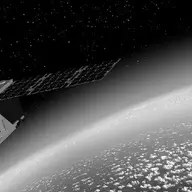
TEMPEST-D
9 tracked publications and 76 citations from 2020–2024. Temporal Experiment for Storms and Tropical Systems – Demonstration. Launched 2018. Life-cycle cost: $11M in 2025 dollars. Active Mission Window October 1, 2018 to July 1, 2023: 8 publications, 0 top-10% credit.
Orbiter · h-index 4 · prime mission ended 2018
Lifetime
Key measures
| Active Mission Window · papers October 1, 2018 to July 1, 2023 | |
|---|---|
| Tracked publications | 8 |
| Citations | 52 |
| Mean citations per publication | 6.5 |
| Median citations per publication | 4.5 |
| Uncited publications | 0 (0%) |
| Top-10% credit | 0 |
| Top-1% credit | 0 |
| Lifetime indices · every tracked publication to date, in any scope | |
|---|---|
| h-index | 4 |
| g-index | 8 |
| m-index, as of October 4, 2026 | 0.6 |
| tori | 0.4 |
| riq | 127 |
Tracked publications
TEMPEST-D Radiometer: Instrument Description and Prelaunch Calibration
25
Calibration and Validation of the TEMPEST-D CubeSat Radiometer
21
-
10
Rainfall Estimation From TEMPEST-D CubeSat Observations: A Machine-Learning Approach
9
Cross Validation of TEMPEST-D and RainCube Observations Over Precipitation Systems
4
Single-Point Calibration for Microwave Sounders: Application to TEMPEST-D
3
Merging TEMPEST microwave and GOES-16 geostationary IR soundings for improved water vapor profiles
2
-
1
TEMPEST-D and GPM-GMI Observations Over Precipitating Systems: A Cross-Validation Study
1
How we found these papers
We searched NASA’s Astrophysics Data System (ADS) for peer-reviewed articles naming TEMPEST-D in the title, abstract or keywords; standard filters drop articles that are not peer-reviewed and magazine pieces. SciX is ADS’s current interface.
((=abs:"Temporal Experiment for Storms and Tropical Systems")) AND property:refereed AND doctype:article AND pubdate:[2018-10 TO 2040-01] AND NOT bibstem:("A&R" OR "AIASJ" OR "AeAm" OR "AirSp" OR "AsNow" OR "AsUAI" OR "AvWST" OR "C&E" OR "C&T" OR "CAPJ" OR "E&S" OR "ENews" OR "IrAJ" OR "JCos" OR "JRASC" OR "LAstr" OR "MNSSA" OR "Met" OR "NewSc" OR "Orion" OR "PhT" OR "PhTea" OR "PhuZ" OR "PhyOJ" OR "PhyW" OR "PlR" OR "SciAm" OR "SpFl" OR "ZemVs")
Removed after review
- 2022QJRMS.148.2325C Weather-forecast ensemble study; does not name TEMPEST-D or its radiometer.
- 2023EMnAs.195..425H TEMPEST here is a coastal-forest flooding experiment, not the CubeSat mission.
- 2024QJRMS.150.3220T Weather-forecast ensemble study by an author named Tempest; not about the mission.
- 2025QJRMS.151e5030T Weather-forecast ensemble study by an author named Tempest; not about the mission.
- 2026PLoSO..2123584M TEMPEST here is a coastal-forest flooding experiment, not the CubeSat mission.
- COWVRTEMPEST Multisensor Satellite-Based Surface State Parameter Retrievals Wrong platform. COWVR and TEMPEST surface-state retrievals from the TEMPEST radiometer re-flown on the ISS as the STP-H8 hosted payload, not the TEMPEST-D CubeSat; the abstract names "Temporal Experiment for Storms and Tropical Systems (TEMPEST)" for the ISS unit, which has no megasheet row.
- Discrimination of Light Precipitation from COWVR + TEMPEST, GMI, and ATMS Passive Microwave Radiometer Observations Wrong platform. COWVR and TEMPEST light-precipitation discrimination using the TEMPEST radiometer on the ISS (STP-H8), not the TEMPEST-D CubeSat; same full-name match on the hosted-payload re-flight.
- Impact of sampling of GPM orbital data on streamflow simulations Streamflow study using GPM rainfall; mentions TEMPEST-D only as a possible future data source.
- Derived Observations From Frequently Sampled Microwave Measurements of Precipitation—Part III: Convoys of mm-Wave Radiometers Concept study of radiometer convoys using simulated data; uses no TEMPEST-D measurements.