Astrophysics

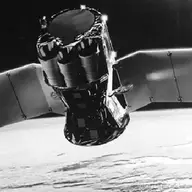
SWAS

76 tracked publications and 2,970 citations from 2000–2026. Submillimeter Wave Astronomy Satellite. Launched 1998. Life-cycle cost: $136M in 2025 dollars. Active Mission Window February 1, 1999 to August 1, 2006: 56 publications, 1.1 top-10% credit.

Survey Observatory · h-index 36 · 5 papers with 100+ citations · prime mission ended 2001


Lifetime

Scope Papers published from the first full month after science operations begin through 2 years after the mission ends. Citations are counted through the third calendar year after each paper appears. Methods Papers published from the first full month after science operations begin through 2 years after the prime mission ends. Citations are counted through the third calendar year after each paper appears. Methods Every tracked publication to date, with every citation to date. Methods

Key measures

Active Mission Window · papers February 1, 1999 to August 1, 2006
Tracked publicationsTracked publications: peer-reviewed research papers we found for the mission. The list may not be complete. Methods56
CitationsCitations received by the tracked publications in the selected scope. The two windowed scopes count each paper’s citations only within its citation window. Methods704
Mean citations per publicationMean citations: total citations divided by tracked publications in the selected scope. One blockbuster paper can lift it. Methods13
Median citations per publicationMedian citations: the middle paper’s citation count in the selected scope; half the papers have more, half fewer. A single blockbuster sways it less than the mean. Methods11
Uncited publicationsUncited publications: papers with no citations in the selected scope. Methods2 (3.6%)
Top-10% creditTop 10%: among the 10% most-cited papers from this division’s missions, ranked against papers published around the same time. A paper naming several missions is split evenly among the missions in this division that claim it, so counts can be fractional. Methods1.1 · 0.02% of division
Top-1% creditTop 1%: among the 1% most-cited papers from this division’s missions within the selected window. Not adjusted for publication year. A paper naming several missions is split evenly among the missions in this division that claim it, so counts can be fractional. Methods0 · 0% of division
Lifetime indices · every tracked publication to date, in any scope
h-indexh-index: the largest h such that h papers have at least h citations each. It only grows with time, so older missions score higher. Methods36
g-indexg-index: the largest g for which the g most-cited papers together hold at least g² citations. Like the h-index, but it lets the most-cited papers count for more. Methods52
m-index, as of October 4, 2026m-index: a mission’s h-index divided by the years since its first peer-reviewed paper. It falls every 1 January even when nothing else changes, so it belongs to the date shown; it also discounts the long operating life that larger missions paid for. Methods1.3
toritori (total research impact, from ADS): for every paper citing one of the mission’s papers, 1 divided by the citing paper’s reference count times the cited paper’s author count, summed, with self-citations removed. It favors citations from papers with short reference lists and from outside the mission’s own authors. Computed over the tracked citation graph, which can be slightly incomplete. Methods11
riqriq (research impact quotient): 1,000 times the square root of tori, divided by the years since the mission’s first paper. A rate, not a total, so it does not keep growing with age the way the h-index and tori do. Methods123

Tracked publications

  1. Implications of Submillimeter Wave Astronomy Satellite Observations for Interstellar Chemistry and Star Formation

    Bergin, E. A., 2000, ApJ

    145 citations

  2. The Submillimeter Wave Astronomy Satellite: Science Objectives and Instrument Description

    Melnick, Gary J., 2000, ApJ

    144 citations

  3. Water Abundance in Molecular Cloud Cores

    Snell, R. L., 2000, ApJ

    135 citations

  4. O₂ in Interstellar Molecular Clouds

    Goldsmith, P. F., 2000, ApJ

    118 citations

  5. Gas-grain chemical models of star-forming molecular clouds as constrained by ISO and SWAS observations

    Charnley, S. B., 2001, A&A

    106 citations

  6. Low upper limits on the O₂ abundance from the Odin satellite

    Pagani, L., 2003, A&A

    95 citations

  7. Multi-line detection of O₂ toward ρ Ophuichi A

    Liseau, R., 2012, A&A

    91 citations

  8. The Origin of Water Vapor and Carbon Dioxide in Jupiter's Stratosphere

    Lellouch, E., 2002, Icar

    88 citations

  9. Water cooling of shocks in protostellar outflows. Herschel-PACS map of L1157

    Nisini, B., 2010, A&A

    87 citations

  10. Detection of Water in the Shocked Gas Associated with IC 443: Constraints on Shock Models

    Snell, R. L., 2005, ApJ

    71 citations

  11. Modeling gas-phase H₂O between 5 μ m and 540 μ m toward massive protostars

    Boonman, A. M. S., 2003, A&A

    61 citations

  12. The abundance of gaseous H₂O and O₂ in cores of dense interstellar clouds

    Roberts, H., 2002, A&A

    59 citations

  13. Submillimeter Wave Astronomy Satellite Observations of Extended Water Emission in Orion

    Snell, R. L., 2000, ApJ

    55 citations

  14. Observations of Water Vapor toward Orion BN/KL

    Melnick, G. J., 2000, ApJ

    54 citations

  15. Abundant gas-phase H₂O in absorption toward massive protostars

    Boonman, A. M. S., 2003, A&A

    53 citations

  16. Interstellar oxygen chemistry

    Viti, S., 2001, A&A

    51 citations

  17. Large-scale ¹³CO J=5-->4 and [C I] Mapping of Orion A

    Plume, R., 2000, ApJ

    49 citations

  18. Sensitive Limits on the Water Abundance in Cold Low-Mass Molecular Cores

    Bergin, Edwin A., 2002, ApJ

    49 citations

  19. The excitation of water in the S140 photon dominated region

    Poelman, D. R., 2005, A&A

    49 citations

  20. Water vapor toward starless cores: The Herschel view

    Caselli, P., 2010, A&A

    47 citations

How we found these papers

We searched NASA’s Astrophysics Data System (ADS) for peer-reviewed articles naming SWAS in the title, abstract or keywords; standard filters drop articles that are not peer-reviewed and magazine pieces. SciX is ADS’s current interface.

((=abs:"Submillimeter Wave Astronomy Satellite" OR (abs:SWAS AND abs:(observation OR submillimeter OR interstellar OR water OR oxygen) AND NOT abs:"southwestern atlantic")) AND collection:astronomy) AND property:refereed AND doctype:article AND pubdate:[1999-02 TO 2040-01] AND NOT bibstem:("A&R" OR "AIASJ" OR "AeAm" OR "AirSp" OR "AsNow" OR "AsUAI" OR "AvWST" OR "C&E" OR "C&T" OR "CAPJ" OR "E&S" OR "ENews" OR "IrAJ" OR "JCos" OR "JRASC" OR "LAstr" OR "MNSSA" OR "Met" OR "NewSc" OR "Orion" OR "PhT" OR "PhTea" OR "PhuZ" OR "PhyOJ" OR "PhyW" OR "PlR" OR "SciAm" OR "SpFl" OR "ZemVs")

Open in SciX

Added after review (1)

  1. Submillimeter Wave Astronomy Satellite Performance on the ground and in orbit Ground and in-orbit performance of the SWAS instrument. Decision 🤖

Removed after review (4)

  1. Far-Infrared and Submillimeter Emission from Galactic and Extragalactic Photodissociation Regions incidental: General PDR model grid (Kaufman et al. 1999) applied to ISO and ground-based data; SWAS is one of five facilities for which the plots 'will be useful', a prospective relevance claim, not a scientific output of the mission. The acknowledgement is a funding line (NASA RTOP 399-25-01, which supports SWAS), not evidence of involvement. Owner decision 2026-09-07. Decision 👨
  2. 2004GeoRL..3124303P SWAS here is the Southwestern Atlantic Shelf; an ocean circulation study. Decision 🤖
  3. THz Instruments for Space Review of terahertz instrument technology; names SWAS only among past instruments. Decision 🤖
  4. The PhotoDissociation Region Toolbox: Software and Models for Astrophysical Analysis Software paper listing SWAS among facilities whose data it could analyze; uses no SWAS data. Decision 🤖