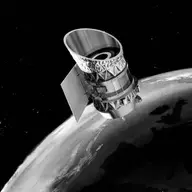
IRAS
367 tracked publications and 20,639 citations from 1983–2026. Infrared Astronomical Satellite. Launched 1983. Life-cycle cost: $816M in 2025 dollars. Active Mission Window March 1, 1983 to December 1, 1985: 31 publications, 3 top-10% credit.
Pointed Observatory · h-index 70 · 46 papers with 100+ citations · prime mission ended 1983
Lifetime
Key measures
| Active Mission Window · papers March 1, 1983 to December 1, 1985 | |
|---|---|
| Tracked publications | 31 |
| Citations | 401 |
| Mean citations per publication | 13 |
| Median citations per publication | 2 |
| Uncited publications | 10 (32%) |
| Top-10% credit | 3 |
| Top-1% credit | 0 |
| Lifetime indices · every tracked publication to date, in any scope | |
|---|---|
| h-index | 70 |
| g-index | 133 |
| m-index, as of October 4, 2026 | 1.6 |
| tori | 144 |
| riq | 272 |
Tracked publications
The Infrared Astronomical Satellite (IRAS) Mission.
1,170
-
1,089
-
907
-
815
BAT AGN Spectroscopic Survey. V. X-Ray Properties of the Swift/BAT 70-month AGN Catalog
583
IRIS: A New Generation of IRAS Maps
453
-
453
A Redshift Survey of IRAS Galaxies. VII. The Infrared and Redshift Data for the 1.936 Jansky Sample
428
The density field of the local Universe
363
The IRAS 1.2 Jy Survey: Redshift Data
337
Infrared Seyferts: a new population of active galaxies?
273
-
271
A circumsolar ring of asteroidal dust in resonant lock with the Earth
231
The Power Spectrum of IRAS Galaxies
230
Cometary dust trails I. Survey
222
The Gas/Dust Ratio in Spiral Galaxies
217
A maximum correlation method for image construction of IRAS survey data.
197
Molecular and Atomic Clouds Associated with Infrared Cirrus in Ursa Major
186
-
182
The Herschel Reference Survey: Dust in Early-type Galaxies and across the Hubble Sequence
182
How we found these papers
We searched NASA’s Astrophysics Data System (ADS) for peer-reviewed articles naming IRAS in the title, abstract or keywords; standard filters drop articles that are not peer-reviewed and magazine pieces. SciX is ADS’s current interface.
((=abs:"Infrared Astronomical Satellite" OR facility:IRAS OR =abs:"IRAS mission")) AND property:refereed AND doctype:article AND pubdate:[1983-03 TO 2040-01] AND NOT bibstem:("A&R" OR "AIASJ" OR "AeAm" OR "AirSp" OR "AsNow" OR "AsUAI" OR "AvWST" OR "C&E" OR "C&T" OR "CAPJ" OR "E&S" OR "ENews" OR "IrAJ" OR "JCos" OR "JRASC" OR "LAstr" OR "MNSSA" OR "Met" OR "NewSc" OR "Orion" OR "PhT" OR "PhTea" OR "PhuZ" OR "PhyOJ" OR "PhyW" OR "PlR" OR "SciAm" OR "SpFl" OR "ZemVs")
Removed after review
- 2001GeCoA..65..951W Iron meteorite study; "Ir-As" is a chemistry term, not IRAS.
- Cryogenic readout electronics with silicon P-MOSFETS for the infrared astronomical satellite, ASTRO-F Describes hardware for Japan's AKARI (ASTRO-F) satellite; not IRAS.
- Cryogenic Optical Testing of Sandwich-Type Silicon Carbide Mirrors Describes hardware for Japan's AKARI (ASTRO-F) satellite; not IRAS.
- Cryogenic Capacitive Transimpedance Amplifier for Astronomical Infrared Detectors Describes hardware for Japan's AKARI (ASTRO-F) satellite; not IRAS.
- Mid-Infrared All-Sky Survey with the Infrared Camera (IRC) on Board the ASTRO-F Satellite Describes an instrument on Japan's AKARI satellite; mentions IRAS only as a benchmark.
- 2007PASJ...59S.369M Overview of Japan's AKARI mission; mentions IRAS only as a predecessor.
- Thermal design and its on-orbit performance of the AKARI cryostat Describes hardware for Japan's AKARI (ASTRO-F) satellite; not IRAS.
- AKARI Observation of the Fluctuation of the Near-infrared Background Uses Japan's AKARI infrared satellite; not IRAS.
- AKARI/AcuA Physical Studies of the Cybele Asteroid Family Uses Japan's AKARI infrared satellite; not IRAS.
- Improvement of micro-vibration of a two-stage Stirling cryocooler Describes space cryocoolers flown on AKARI and other satellites; not IRAS.
- The Ariel Target List: The Impact of TESS and the Potential for Characterizing Multiple Planets within a System Target list for ESA's Ariel mission; matches IRAS only through a generic subject keyword.
- Properties of Host Galaxies of Submillimeter Sources as Revealed by JWST Early Release Observations in SMACS J0723.3-7327 Uses JWST and ALMA observations; matches IRAS only through a generic subject keyword.
- Discovery of Seven Volcanic Outbursts on Io from an Infrared Telescope Facility Observation Campaign, 2016-2022 Uses NASA's ground-based Infrared Telescope Facility; matches IRAS only through a generic subject keyword.
- SNR 1987A: Spitzer Data from Days 6000 to 8000 Revisited Uses Spitzer data; matches IRAS only through a generic subject keyword.
- 1993AJ....106.1639M Speckle survey of binary stars; IRAS appears only in a garbled keyword string.
- Transient response of stressed Ge:Ga detector for ASTRO-F Describes hardware for Japan's AKARI (ASTRO-F) satellite; not IRAS.
- Development of Cryogenic Readout Electronics for Sensitive Far-Infrared Detectors Describes hardware for Japan's AKARI (ASTRO-F) satellite; not IRAS.
- Observations of near-Earth objects by the Japanese infrared survey mission ASTRO-F Pre-launch observing plans for Japan's ASTRO-F (AKARI) satellite; not IRAS.
- The ASTRO-F mission: Large area infrared survey Pre-launch overview of Japan's ASTRO-F (AKARI) mission; mentions IRAS only as a predecessor.
- Cryogenic optical performance of the ASTRO-F SiC telescope Describes hardware for Japan's AKARI (ASTRO-F) satellite; not IRAS.
- AKARI (ASTRO-F): Flight performance and preliminary results Overview of AKARI's flight performance; mentions IRAS only as a predecessor.
- Flight Performance of the AKARI Cryogenic System Flight performance of AKARI's cryogenic system; not IRAS.
- AKARI Infrared Imaging of Reflection Nebulae IC4954 and IC4955 Uses Japan's AKARI infrared satellite; not IRAS.
- Radiation Effects on Stressed Ge:Ga Array Detector of Far-Infrared Surveyor on AKARI Radiation effects on an AKARI detector; not IRAS.
- AKARI Observations of Brown Dwarfs. I. CO and CO₂ Bands in the Near-infrared Spectra Uses Japan's AKARI infrared satellite; not IRAS.
- Extended dust shell of the carbon star U Hydrae observed with AKARI Uses Japan's AKARI infrared satellite; not IRAS.
- AKARI Observations of Brown Dwarfs. II. CO₂ as Probe of Carbon and Oxygen Abundances in Brown Dwarfs Uses Japan's AKARI infrared satellite; not IRAS.
- Effects of High-Energy Ionizing Particles on the Si:As Mid-Infrared Detector Array on Board the AKARI Satellite Radiation effects on an AKARI detector; not IRAS.
- Laboratory and In-Flight Measurements at 10-55 K of InSb Near-Infrared Detector Performance for the Warm Mission of the AKARI Satellite Detector performance for AKARI's warm mission; not IRAS.
- Brightness and Fluctuation of the Mid-infrared Sky from AKARI Observations toward the North Ecliptic Pole Uses Japan's AKARI infrared satellite; not IRAS.
- Lifetime test and heritage on orbit of coolers for space use Space cryocooler lifetime tests; the coolers flew on AKARI, not IRAS.
- Supernova Remnants in the Akari Fis All-Sky Survey Uses Japan's AKARI infrared satellite; not IRAS.
- Albedo Properties of Main Belt Asteroids Based on the All-Sky Survey of the Infrared Astronomical Satellite AKARI Uses Japan's AKARI infrared satellite; not IRAS.
- (25143) Itokawa: The power of radiometric techniques for the interpretation of remote thermal observations in the light of the Hayabusa rendezvous results* Uses AKARI and ground-based observations of asteroid Itokawa; not IRAS.
- AKARI infrared camera observations of the 3.3 μm PAH feature in Swift/BAT AGNs Uses Japan's AKARI infrared satellite; not IRAS.
- Revised calibration for near- and mid-infrared images from ∼4000 pointed observations with AKARI/IRC Calibration of AKARI camera images; not IRAS.
- Size Dependence of Dust Distribution around the Earth Orbit Uses Japan's AKARI infrared satellite; not IRAS.
- Surface brightness correction for compact extended sources observed by the AKARI Far-Infrared Surveyor in the slow-scan mode Calibration method for AKARI far-infrared images; not IRAS.
- AKARI mission program: Excavating Mass Loss History in extended dust shells of Evolved Stars (MLHES). I. Far-IR photometry† Uses Japan's AKARI infrared satellite; not IRAS.
- On surface brightness and flux calibration for point and compact extended sources in the AKARI Far-IR All-Sky Survey (AFASS) maps Calibration of AKARI far-infrared survey maps; not IRAS.
- The Isotropic Interplanetary Dust Cloud and Near-infrared Extragalactic Background Light Observed with COBE/DIRBE Uses COBE/DIRBE data; matches IRAS only through a generic subject keyword.
- A Search for Rapid Mid-infrared Variability in Gamma-Ray-emitting Narrow-line Seyfert 1 Galaxies Uses WISE data; matches IRAS only through a generic subject keyword.
- Cosmic-ray-related Signals from Detectors in Space: The Spitzer/IRAC Si:As IBC Devices Cosmic-ray effects on Spitzer detectors; matches IRAS only through a generic subject keyword.
- SkyHopper mission science case I: Identification of high redshift Gamma-Ray Bursts through space-based near-infrared afterglow observations Science case for the proposed SkyHopper satellite; matches IRAS only through a generic keyword.
- NEOWISE Observations of the Potentially Hazardous Asteroid (99942) Apophis Uses NEOWISE data; matches IRAS only through a generic subject keyword.
- Near-infrared Polarization Charateristics of the Zodiacal Light Observed with DIRBE/COBE Uses COBE/DIRBE data; matches IRAS only through a generic subject keyword.
- Mid-infrared Ensemble Variability of Broad-line and Narrow-line Seyfert 1 Galaxies Uses WISE data; matches IRAS only through a generic subject keyword.
- 2003A&A...402L..39H Odin satellite results; names IRAS only in a source designation.
- The Wide-field Infrared Survey Explorer (WISE): Mission Description and Initial On-orbit Performance Mission description of WISE; mentions IRAS only as an earlier sky survey.