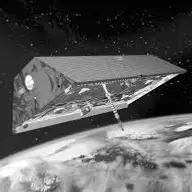
GRACE
Orbiter · Competed · PI-led · Launched on March 17, 2002 · Completed · LCC: $125M/$243M (2025 $)
| Tracked publications | 2,286 |
|---|---|
| Citations | 32,652 |
| Top-10% papers | 280 |
| Top-1% papers | 48 |
| Citation indices | |
|---|---|
| h-index | 67 |
| g-index | 97 |
| m-index | 3.8 |
| tori | 936 |
| riq | 1,176 |
Publications and citations by year
Publications per yearCumulative citations
Institutional contributions
Tracked publications (4,697)
The gravity recovery and climate experiment: Mission overview and early results
2,105
Global Glacial Isostasy and the Surface of the Ice-Age Earth: The ICE-5G (VM2) Model and GRACE
2,065
Satellite-based estimates of groundwater depletion in India
1,978
GRACE Measurements of Mass Variability in the Earth System
1,956
The development and evaluation of the Earth Gravitational Model 2008 (EGM2008)
1,661
Emerging trends in global freshwater availability
1,538
High-resolution CSR GRACE RL05 mascons
1,175
Post-processing removal of correlated errors in GRACE data
1,121
Space geodesy constrains ice age terminal deglaciation: The global ICE-6G_C (VM5a) model
1,101
-
1,037
Accuracy of scaled GRACE terrestrial water storage estimates
1,028
Global water resources and the role of groundwater in a resilient water future
895
Contributions of GRACE to understanding climate change
879
Evaluation of the ECMWF ocean reanalysis system ORAS4
859
Recent contributions of glaciers and ice caps to sea level rise
749
Remote sensing of drought: Progress, challenges and opportunities
740
Characteristics and trends in various forms of the Palmer Drought Severity Index during 1900-2008
732
-
728
Estimating geocenter variations from a combination of GRACE and ocean model output
702
Satellites measure recent rates of groundwater depletion in California's Central Valley
683
How we found these papers
We searched NASA’s Science Explorer (SciX) for peer-reviewed articles naming GRACE in the title, abstract or keywords; standard filters drop articles that are not peer-reviewed and magazine pieces.
((((=abs:"Gravity Recovery and Climate Experiment" OR (abs:GRACE AND (abs:(satellite OR gravity OR geoid OR gravimetry OR mission OR hydrology OR mascon OR plasma OR ionosphere OR thermosphere) OR =abs:groundwater OR =abs:"water storage" OR =abs:"mass concentration" OR =abs:"K-band ranging" OR =abs:"K-band range rate"))) AND NOT =abs:"GRACE-FO") OR (=abs:"GRACE/GRACE-FO" AND abs:(data OR gravity OR water OR mass OR satellite OR mission)) OR =abs:"GRACE and GRACE-FO" OR =abs:"GRACE and GRACE Follow-On" OR =abs:"GRACE and its successor" OR =abs:"GRACE data" OR =abs:"GRACE observations" OR =abs:"GRACE mission" OR =abs:"GRACE satellite" OR =abs:"GRACE satellites" OR =abs:"GRACE gravity" OR =abs:"GRACE measurements" OR =abs:"GRACE terrestrial" OR =abs:"GRACE mascon" OR =abs:"GRACE derived" OR =abs:"GRACE based") AND NOT abs:(afterglow OR POLARCAT) AND NOT =abs:(coronary OR myocardial)) AND property:refereed AND doctype:article AND pubdate:[2002-04 TO 2040-01] AND NOT bibstem:("A&R" OR "ACPD" OR "AIASJ" OR "AMTD" OR "AeAm" OR "AirSp" OR "AsNow" OR "AsUAI" OR "AvWST" OR "BGD" OR "C&E" OR "C&T" OR "CAPJ" OR "CliPD" OR "E&S" OR "ENews" OR "ESDD" OR "ESSDD" OR "ESuDD" OR "GID" OR "GMDD" OR "GeCAS" OR "HESSD" OR "IrAJ" OR "JCos" OR "JRASC" OR "LAstr" OR "MNSSA" OR "Met" OR "NHESD" OR "NPGD" OR "NewSc" OR "OcScD" OR "Orion" OR "PhT" OR "PhTea" OR "PhuZ" OR "PhyOJ" OR "PhyW" OR "PlR" OR "SOILD" OR "SciAm" OR "SpFl" OR "TCD" OR "ZemVs")
Removed after review
- The Lunar Gravity Ranging System for the Gravity Recovery and Interior Laboratory (GRAIL) Mission Instrument description of the GRAIL lunar gravity ranging system; mentions GRACE only as design heritage.
- Observation of GRB 030131 with the INTEGRAL satellite Gamma-ray burst observations; GRACE here is the ESO Gamma-Ray Burst Collaboration, not the gravity mission.
- Intersatellite laser ranging with homodyne optical phase locking for Space Advanced Gravity Measurements mission Describes the laser ranging system for China's proposed SAGM gravity mission; mentions GRACE Follow-On only for comparison.
- Impacts of Interpolation Formula, Correlation Coefficient and Sampling Interval on the Accuracy of Grace Follow-on Intersatellite Range-Acceleration Pre-launch simulation of GRACE Follow-On ranging accuracy; reports no GRACE results.
- Intersatellite laser ranging instrument for the GRACE follow-on mission Instrument description of the GRACE Follow-On laser ranging instrument, hardware of the successor mission.
- The design and construction of a prototype lateral-transfer retro-reflector for inter-satellite laser ranging Design of a prototype mirror assembly for the GRACE Follow-On laser interferometer, hardware of the successor mission.
- Precise and Rapid Recovery of the Earth's Gravity Field from the Next-Generation GRACE Follow-On Mission using the Residual Intersatellite Range-Rate Method Simulated gravity recovery for the then-future GRACE Follow-On mission; reports no GRACE results.
- Space-based detectors Review of metrology for space-based gravitational-wave detectors; mentions the GRACE Follow-On laser interferometer only as related hardware.
- Laser link acquisition demonstration for the GRACE Follow-On mission Laboratory demonstration of laser link acquisition for GRACE Follow-On, hardware of the successor mission.
- Laser beam steering for GRACE Follow-On intersatellite interferometry Laser beam-steering hardware for the GRACE Follow-On interferometer, the successor mission.
- Measuring coalignment of retroreflectors with large lateral incoming-outgoing beam offset Test method for prototype GRACE Follow-On interferometer optics, hardware of the successor mission.
- Speedup of Micromagnetic Simulations with C++ AMP on Graphics Processing Units Describes micromagnetic simulation software named Grace; unrelated to the gravity mission.
- Multi-link laser interferometry architecture for interspacecraft displacement metrology Describes a proposed laser interferometry architecture for future missions; mentions GRACE and GRACE Follow-On only as heritage.
- Line of sight calibration for the laser ranging interferometer on-board the GRACE Follow-On mission: on-ground experimental validation On-ground calibration of the GRACE Follow-On laser ranging interferometer, an instrument of the successor mission.
- Mass variation observing system by high low inter-satellite links (MOBILE) - a new concept for sustained observation of mass transport from space Concept of the proposed MOBILE gravity mission; mentions GRACE only as heritage.
- In-Orbit Performance of the GRACE Follow-on Laser Ranging Interferometer In-orbit performance of the GRACE Follow-On laser ranging interferometer; uses no original GRACE data.
- MOCASS: A Satellite Mission Concept Using Cold Atom Interferometry for Measuring the Earth Gravity Field Concept of the proposed MOCASS gravity mission; mentions GRACE only as heritage.
- Laser metrology concept consolidation for NGGM Laser metrology concept for the proposed Next Generation Gravity Mission; mentions GRACE only as heritage.
- Extending the Global Mass Change Data Record: GRACE Follow-On Instrument and Science Data Performance Instrument and data-performance overview of the successor mission GRACE Follow-On; mentions GRACE as the predecessor record.
- Exploring Thermospheric Variations Triggered by Severe Geomagnetic Storm on 26 August 2018 Using GRACE Follow-On Data Analyzes a 2018 geomagnetic storm with GRACE Follow-On accelerometer data; uses no original GRACE data.
- Tidal Geopotential Dependence on Earth Ellipticity and Seawater Density and Its Detection With the GRACE Follow-On Laser Ranging Interferometer Ocean tide gravity modeling tested only against GRACE Follow-On laser ranging data; uses no original GRACE data.
- Limits on the stochastic gravitational wave background and prospects for single-source detection with GRACE Follow-On Gravitational-wave limits from GRACE Follow-On data; uses no original GRACE data.
- ESA's next-generation gravity mission concepts Overview of ESA's proposed next-generation gravity mission concepts; mentions GRACE only as heritage.
- Analysis of performance and robustness against jitter of various search methods for acquiring optical links in space Optical link acquisition methods applied to GRACE Follow-On; uses no original GRACE data.
- Novel Along-Track Processing of GRACE Follow-On Laser Ranging Measurements Found Abrupt Water Storage Increase and Land Subsidence During the 2021 March Australian Flooding Analyzes the March 2021 Australian flood with GRACE Follow-On laser ranging data; uses no original GRACE data.
- An Analysis of Total Water Storage Changes Obtained from GRACE FO Observations over the Venezia Islands Area Supported with Additional Data Water storage change around Venice from GRACE Follow-On observations; uses no original GRACE data.
- GRACE Follow On Accelerometer Data Recovery Recovery of GRACE Follow-On accelerometer data; mentions GRACE only as the predecessor.
- "Time Variable Earth Gravity Field Models From the First Spaceborne Laser Ranging Interferometer" Gravity fields from the GRACE Follow-On laser interferometer, 2019-2020; mentions GRACE only as the predecessor.
- Multiscale gravity measurements to characterize 2020 flood events and their spatio-temporal evolution in Yangtze river of China Analyzes the 2020 Yangtze floods with GRACE Follow-On data; uses no original GRACE data.
- 2021NatSR..1112705B Cardiology study of myocardial infarction; GRACE here is a clinical risk score, not the gravity mission.
- High stability laser locking to an optical cavity using tilt locking Laboratory laser-locking demonstration; mentions GRACE Follow-On only as a performance benchmark.
- Earth's Time-Variable Gravity from GRACE Follow-On K-Band Range-Rates and Pseudo-Observed Orbits Time-variable gravity from GRACE Follow-On ranging data; uses no original GRACE data.
- Modeling GRACE-FO accelerometer data for the version 04 release Processing of GRACE Follow-On accelerometer data; mentions GRACE only as heritage.
- Enhanced orbit determination for formation-flying satellites based on M-estimation Orbit determination with GRACE Follow-On GPS data; uses no original GRACE data.
- URE and URA for predicted LEO satellite orbits at different altitudes Satellite orbit prediction tested on GRACE Follow-On and Sentinel satellites; uses no original GRACE data.
- An Improved Next Generation Gravity Mission Proposed accelerometer for a next-generation gravity mission; mentions GRACE Follow-On only as heritage.
- Absolute Frequency Readout of Cavity against Atomic Reference Laser frequency-stabilization technique for future gravity missions; mentions GRACE Follow-On only as heritage.
- Recovering Regional Groundwater Storage Anomalies by Combining GNSS and Surface Mass Load Data: A Case Study in Western Yunnan Groundwater study for 2018-2020, after GRACE ended; its gravity data are from GRACE Follow-On.
- Towards NGGM: Laser Tracking Instrument for the Next Generation of Gravity Missions Laser tracking instrument concept for the proposed Next Generation Gravity Mission; mentions GRACE only as heritage.
- Real-Time LEO Satellite Orbits Based on Batch Least-Squares Orbit Determination with Short-Term Orbit Prediction Real-time orbit determination with GRACE Follow-On data; uses no original GRACE data.
- On-Axis Optical Bench for Laser Ranging Instruments in Future Gravity Missions Optical bench design for future gravity missions; mentions GRACE Follow-On only as heritage.
- Mass Variations in Terrestrial Water Storage over the Nile River Basin and Mega Aquifer System as Deduced from GRACE-FO Level-2 Products and Precipitation Patterns from GPCP Data Water storage for June 2018-June 2021 from GRACE Follow-On data only.
- Enhancing the precision limits of interferometric satellite geodesy missions Measurement concepts for future interferometric geodesy missions; mentions GRACE only as heritage.
- Dual quaternion-based dynamics and control for gravity recovery missions Formation-flying dynamics model tested with GRACE Follow-On data; uses no original GRACE data.
- Improved undifferenced ambiguity resolution for LEO precise orbit determination Orbit determination of the GRACE Follow-On satellites; uses no original GRACE data.
- Disturbances from single event upsets in the GRACE follow-on laser ranging interferometer Radiation upsets in the GRACE Follow-On laser interferometer; mentions GRACE only as the predecessor.
- Characteristics analysis and prediction of Low Earth Orbit (LEO) satellite clock corrections by using least-squares harmonic estimation Satellite clock study using GRACE Follow-On satellites; uses no original GRACE data.
- Assessment of a near-polar pair mission for detecting the Earth's temporal gravity field Design study for a proposed next-generation gravity mission; mentions GRACE only through GRACE Follow-On.
- Combined monthly GRACE-FO gravity fields for a Global Gravity-based Groundwater Product Combined GRACE Follow-On gravity fields; mentions GRACE only as the origin of the method.
- Monitoring Groundwater Storage Basins and Hydrological Changes Using the GRACE Satellite and SENTINEL-1 for the Ganga River Basin Ganga basin subsidence study for 2018-2023, after GRACE ended; its gravity data are from GRACE Follow-On.